
Have you ever thrown the handle of the flush and heard only silence? The water is there, and it is not moving, and you find out your toilet is not flushing. It is one of those embarrassing domestic situations that may become stressful within a very brief period of time, and particularly when such a situation is unforeseen.
It is good to know that you do not even need a plumber and do not need a set of fancy tools to fix the problem. You can still use your own hands to flush your toilet and reestablish sanity in a few minutes with just some common household materials. You are going to learn simple yet effective methods of flushing a toilet manually in this blog.
1. Try the Bucket Flush Method
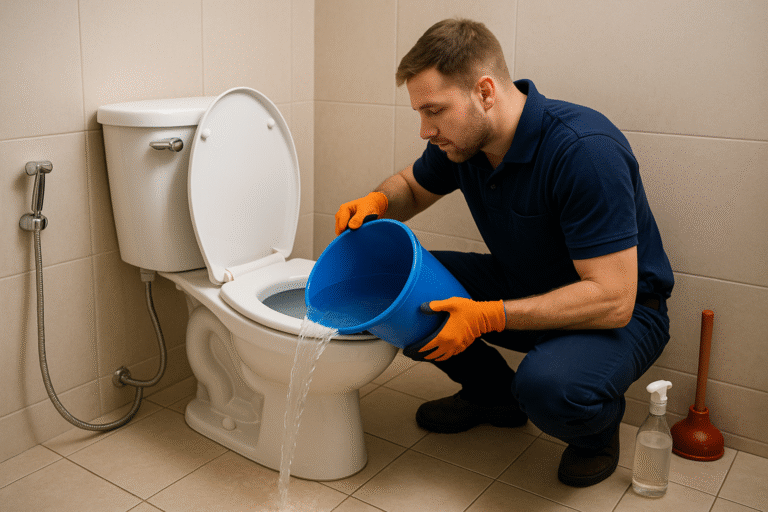
One of the most used and easiest methods of toilet flushing manually is the bucket flush. It is high-speed, simple, and functional in virtually all situations where a water or flushing supply is unavailable. An enormous bucket should then be filled with one-half or three-quarters of water. This is followed by pouring water in the bowl of the toilet, but in a smooth stream, into the centre. This falling rush of water also produces a tremendous down force and is like an ordinary flush.
You will watch the trash go round and round as usual. Pour not too slowly, or it will not provide enough pressure to empty the bowl. Moreover, do not fill the bucket too full, or the water will go over. A leverage on the power of gravity is used, pouring the water at a steeper angle in a multi-story house, to obtain a greater flushing power. And if you need faster professional help, they can step in to resolve the issue promptly.
3. Apply Handheld Shower
A strong manual flushing tool is already available to you, should your bathroom have a handheld shower or bidet sprayer. Attach the sprayer to the closest water source and point the sprayer directly into the bowl of the toilet. Next, spray over with steady or maintained pressure for 10-15 seconds. The flowing water assists in flushing the waste along the drain and removes the small clogs quite successfully.
It is particularly convenient when you have a plumbing outage or your flush handle is stuck. Another solution is to use a flexible garden hose, which is connected to an outdoor tap, in case of appropriate space allocation in your bathroom. The trick is to have a good and yet controlled water flow to prevent splashing. Warm water dissolves waste more quickly, but never boiling water- it may break your porcelain toilet bowl.
4. Quick Flush Pour Hot Water and Soap
Soap and hot water can work out when you are in a jam and do not have a functioning flush, but do not want to go to the restroom with a bucket. Add a couple of tabs of dish soap or shampoo into the toilet bowl. Heat a gallon of water, then, till hot (not boiling). Pour slowly the hot water into the bowl from waist level. The heat loosens the waste, and the soap is used as a lubricant so that debris flows through the pipes with ease.
Allow the mixture to rest 10-15 minutes, then flush manually with a bucket of water or by raising the flapper. This is an effective way of clearing any small clogs and also clears up Odours and gives your toilet a fresh smell. It is natural, safe, and works.
5. Unclog Before You Flush
There are also times when the toilet is not flushing due to a blockage that has been caused by a clog that is in the drain. In this instance, it is better to clear the obstruction by first attempting to flush out manually and then attempting to flush out manually. Begin with a plunger–have it firmly seated over the drain hole and squeeze down gradually, forming suction. Next, a constant up and down motion for approximately 30 seconds. When the water level begins to decrease, then you have done it succeedingly.
Otherwise, repeat the procedure or apply a plumbing snake (toilet auger) to loosen deeper clogs. After clearing the obstruction, check the smooth flow of draining by use of the bucket flush technique. First, unclogging helps avoid overflow and makes all other methods of flushing a manual one much more effective. Soap and hot water should be added to difficult clogs first to loosen debris, then plunged to minimize effort and maximize results.
6. Use a Small Container in Emergencies
In case you do not have such a big container, there is nothing to be worried about; you can also do the manual flush with the help of smaller containers. Prepare several cups or bowls of water and pour them into the toilet bowl one at a time and in haste. The quick, rapid dump of the smaller water dumps creates sufficient pressure to closely resemble a normal flush.
It is a less fast way but is effective during an emergency when you have a small amount of resources, e.g., camping or power outages. Do not forget to use gloves to be clean and pour slowly to avoid splashing. Recycled greywater (such as bathwater residues) can even be used in order to save fresh water and still be clean. Toilets do not require any fancy mechanisms to flush, but simply have gravity and sufficient water pressure to press the waste to flow through the trap.
Conclusion
Having a non-working toilet can easily ruin your day; however, as you are aware that these eight easy manual flushing techniques will rescue you and help you avoid stress and embarrassment. Since the basic bucket flush up to the ingenious green features such as the use of grey water, all the methods can guarantee that even when the plumbing goes wrong, you can continue to be comfortable and hygienically clean. Keep in mind that your family can be healthy only with a clean and convenient bathroom.
And given a little ingenuity and expediency, every flush failure is manageable. There are some cases when it is better to leave your home in the capable hands of a professional service, or a same day plumbing service to ensure immediate help in urgent situations.
