
Clean Smelly Drain: Easy Tips and Tricks for Home
Did you ever walk into your kitchen or your bathroom, and think to yourself, Why does it smell so bad in here? Yes, and you are not alone indeed. Unpleasant drainage is a very common phenomenon and the smell can spread to a bigger radius than you would wish. The good thing? You will not need a professional plumber and the expensive chemicals at the moment. You can smell like the whole house with your mere fingers and restore the freshness in the shortest time possible in a few tricks using the common household tools.
The smells are usually brought about by rotting garbage in your pipes, food remnants, grease, residues of the soaps or hair, and once you deal with the source of the smelling, your house will immediately smell clean.
1. What Causes Drains to Smell?
Drain smells do not occur randomly, and they have certain preconditions, as per expert plumbers. Leftover food particles, cooking grease and oily residues in the kitchen tend to adhere to the pipes on the side and start decomposing. In the bathroom, hair, soap film, toothpaste and natural oils in the skin get washed down the drain, attaching themselves inside the drainage pipes. This generates a damp atmosphere in which bacteria proliferate, causing a strong and unpleasant odour. Being aware of what is making the odour will enable you to clean better since you are aware of what you are fighting with, specifically the organic buildup and the growth of bacteria.
2. Start with a Hot Water Flush
One should loosen the dirt in the inner side of the drain then the cleaning method should be applied. The hot water in the drain can be helpful in melting the grease, loosening the soap scum and pushing the lighter residue which is still left stuck on the drain. Heat water, allow it to cool down and add slowly in two or three portions. This easy measure tends to soften the odour and preconditions the further cleaning of the drain. It is a fast, cost-effective way of ensuring minor smells do not become hard to remove.
3. Apply a Baking Soda and Vinegar Reaction
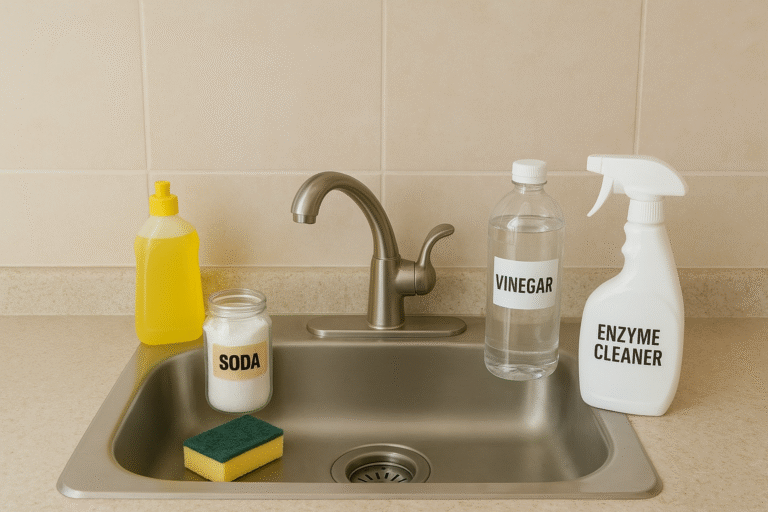
Baking soda and vinegar are some of the surest home remedies to odorous drains. The combination of these two ingredients forms a natural fizz which destroys organic waste in the pipes. The blend goes deep into the drain and removes the residue that cannot be consumed by the hot water. Once the baking soda is poured into the drain, vinegar is added behind it, and the top is covered to confine the reaction within. Once the fizzing has ceased, rinsing the drainage system once again with hot water removes the softened grime and greatly lowers bad smells. It is a non-toxic process that is environmentally friendly and very successful.
4. Wash the Drain Stopper and Area Around the Drain
In some instances the smell can not be deep within the drain but is on the surface. Hair, food, and soap traces frequently get trapped in drain devices, and strainers then start to rot away. Washing the stopper with warm, soapy water and removing it can be used to remove the hidden buildup. Washing around the drain aperture will also eliminate slime and dirt that will contribute to the smell. A clean drain entrance will not allow the new debris to slide further into the inside and will also keep the environment clean and hygienic.
5. Try a Salt and Hot Water Scrub
In the case of drains that are regularly used with oily or greasy foodstuffs, coarse salt can be used as an effective natural scrub. Salt mixed with hot water will softly cleanse the inside of the pipe and loosen sticky residue which entraps smells. Adding coarse salt to the drain and then pouring a lot of hot water produces a simple yet effective cleaning procedure. This technique is especially useful in kitchens, in which the secret of bad smells is often grease. Frequent salt flushes also prevent the pipes from being blocked with dirt.
6. Apply Enzyme Cleaners on Sticky Smells
When the smell is not removed despite the application of natural remedies, then you may be dealing with a deeper organic buildup. Enzyme cleaners are full of natural bacteria which mine away organic waste, and thus they are very effective in getting rid of odours in the long term. They are also sluggish yet comprehensive and go to areas in the drain that are inaccessible by brushes and home remedies. Using enzyme cleaning solutions at night and spending a few hours will ensure that the product is in a position to break down waste. In the long run, this brings in freshness and eliminates the possibility of a repeated smell.
7. Keep Clean through Routine Care
When your drains smell fresh once more, it is much easier to avoid the future smell. Some of these rules as not pouring grease into the sink, placing a drain strainer to trap the food scraps and hair, and flushing the hot water once a week, can go a long way. Deep cleaning, as per professional staff with natural products every month, like baking soda and vinegar, also ensures that drains are kept odour-free. A regular check-up will make the drainage system clean and hygienic and will work smoothly, which will eliminate the necessity of having to clean the drainage system heavily in the future.
Conclusion
You do not need a stinking drain to occupy your kitchen or bathroom. Simple home-based solutions, natural cleaners and frequent maintenance will help you get the odours out and keep your drain system fresh and functional. The buildup of grease, hair, or bacteria, the odour is either way, but the correct way will provide a quick solution.
